
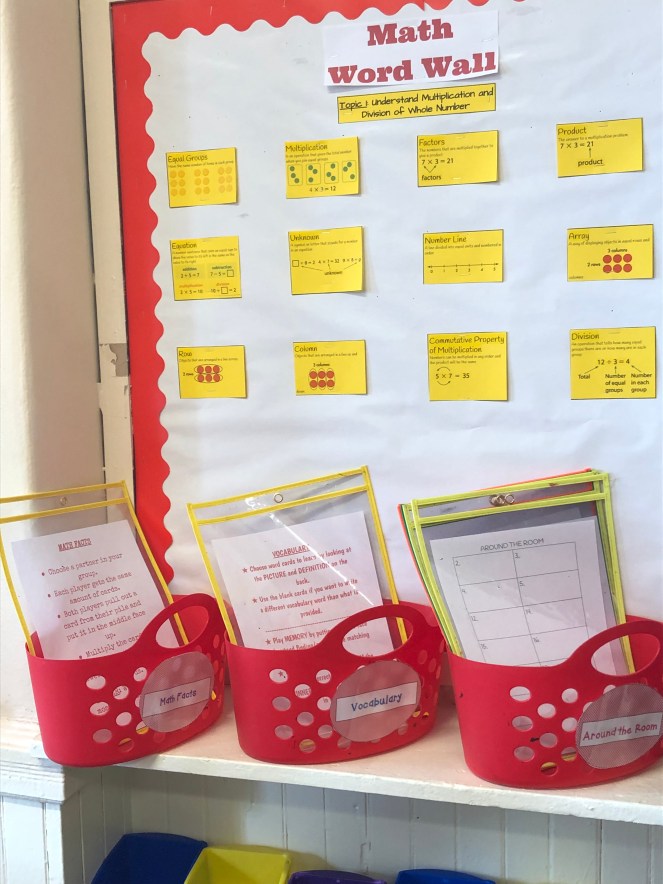
Let’s talk MATH! I’ll start with a daily math block and then share what a unit looks like. My math block is 100 minutes (2 periods). The block starts with a problem of the day or number talk. Next, we do a fluency drill in various formats. I teach the mini-lesson and my students go off to practice. The math block ends with students in centers then completing a journal reflection.
PROBLEM OF THE DAY
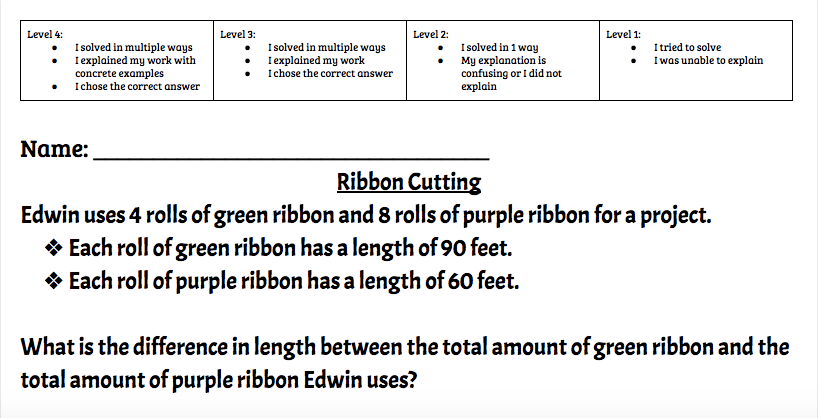
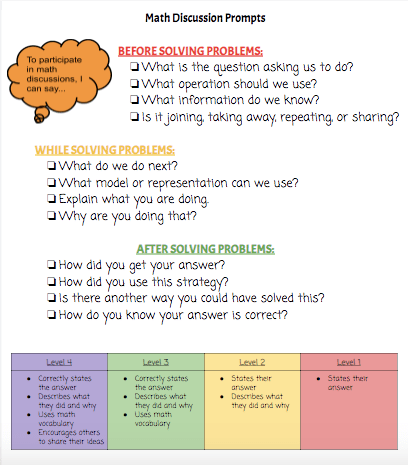
A problem of the day is about a productive struggle through discussion and use of materials or resources. I expose my students to skills we have learned before but through a complex problem. I prepare my students to complete these problems through discussion questions. They use the CUBES strategy to begin to understand the problem. I provide them with a list of discussion questions, for when they get stuck, to continue to unpack the problem. At this time, they also use materials and resources to solve the problem. Once they have discussed and developed a strategy, they receive their sheet and begin solving. I provide differentiated sheets for my students who may need a bit more guidance. They answer the multiple choice and write an explanation for how they got their answer. The students work is guided by a rubric where they should always be striving for a level 3 and level 4. Once their work is complete, they self-assess.
NUMBER TALK
I love having number talks! My love for them began with my kindergartners, who surprised me every number talk! Now, with my third graders we can have even better discussions. Number talks are all about increasing students’ number sense. A number talk is all about solving problems mentally. Students should be using strategies such as: making tens, using friendly numbers, adding/subtracting with place value, compensation, and more. These strategies need to be taught. Once these skills are taught, students are able to continue to build their number sense through number talks.
During a number talk, you pose the problem. You give the students about 2-3 minutes to solve the problem mentally. I ask students to show when they’re ready with a quick thumbs up and put 2 or 3 fingers up if they have more than one strategy. Once many students are ready, they turn and share their strategies in small groups. This give everyone a chance to discuss, push their classmates thinking, and hear all voices. Lastly, the class comes together and shares the ideas as a whole. I usually have about 4 students post their strategies and provide time for students to ask questions.
I do problem of the day 3 times a week, usually Monday, Wednesday, Friday. I do number talks twice a week, Tuesday and Thursday.
FLUENCY DRILLS
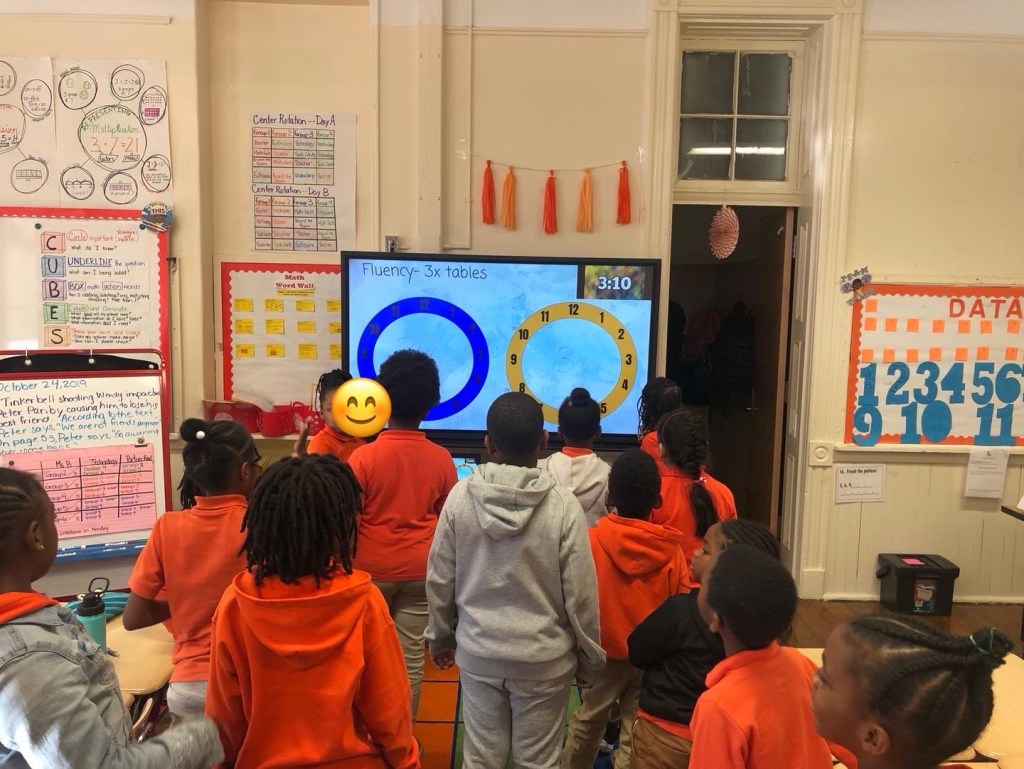
In 3rd grade, it is so important for students to know their multiplication facts. My fluency drills are all multiplication based. We move through the times tables as the students master them. I noticed that my students LOVE music so I usually start the week with a music based multiplication fact video. https://youtu.be/e7rYbk9PNuM. I may use the video for 1 or 2 days then we move into flash cards and/or around the world. I like to provide variety. Fridays are for game fluency! I separate the students into 2 lines. They each go to the board and write the product for the multiplication equation. Look at the picture below: The fact we are multiplying goes in the middle and the other factors around the circle. Students right the product on the outside of the circle.
MINI- LESSON AND CENTERS
My mini lessons begin with stating the objective of the days lesson. Then, I review the anchor chart and steps we will take to achieve the objective. I model the skill then provide students with a chance to practice the skill. Students will practice with guidance from me or by working with a partner. If they work with a partner or in a small group, I travel to the groups to assist and monitor their progress. After their practice, I will ask a question that gets students to discuss their work and new learning. Before leaving the meeting area, I will provide a check for understanding. I will use this to see who still needs extra support with the skill. Ideally, this runs for about 10-12 minutes.
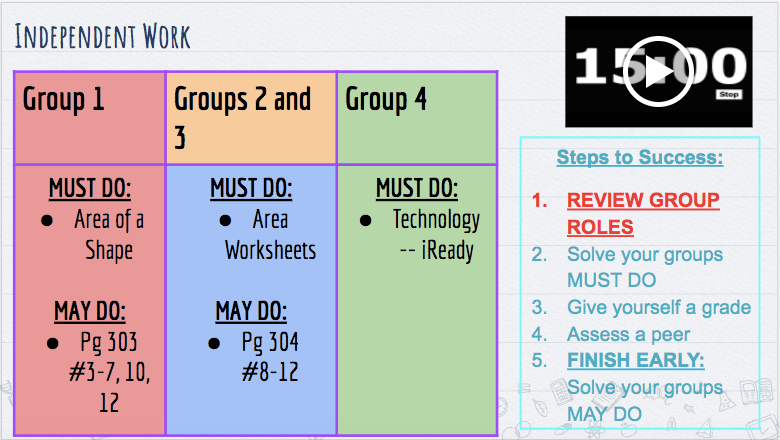
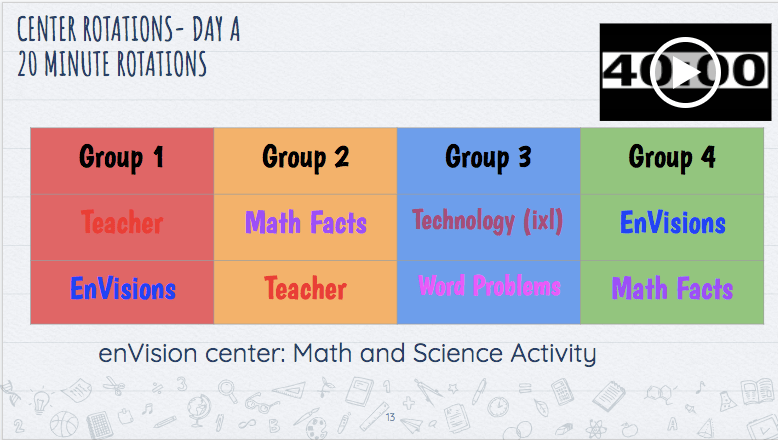
Now that students are going off to practice independently, I will work in a small group with students who struggled on the check for understanding. I am prepared with possible misconceptions to help them gain mastery. The independent work lasts for 15 minutes. Then students go off into centers. I post their center schedule and meet with 2 different groups. These groups receive instruction based on their overall math abilities (data from iReady diagnostics). We rotate through the center days (A,B,C,D) so that I meet with each group twice a week. Lastly, students complete a journal reflection which they love to do. They always bring their notebooks to me so I can see their response.
It is definitely A LOT but it truly is doable and manageable! It is so worth the time it takes to do because the children benefit from the structure and THEY LOVE IT!
 inspire innovators